Japan Budget Travel: How I Spent 21 Days for Under $2,000 — My Real Itinerary
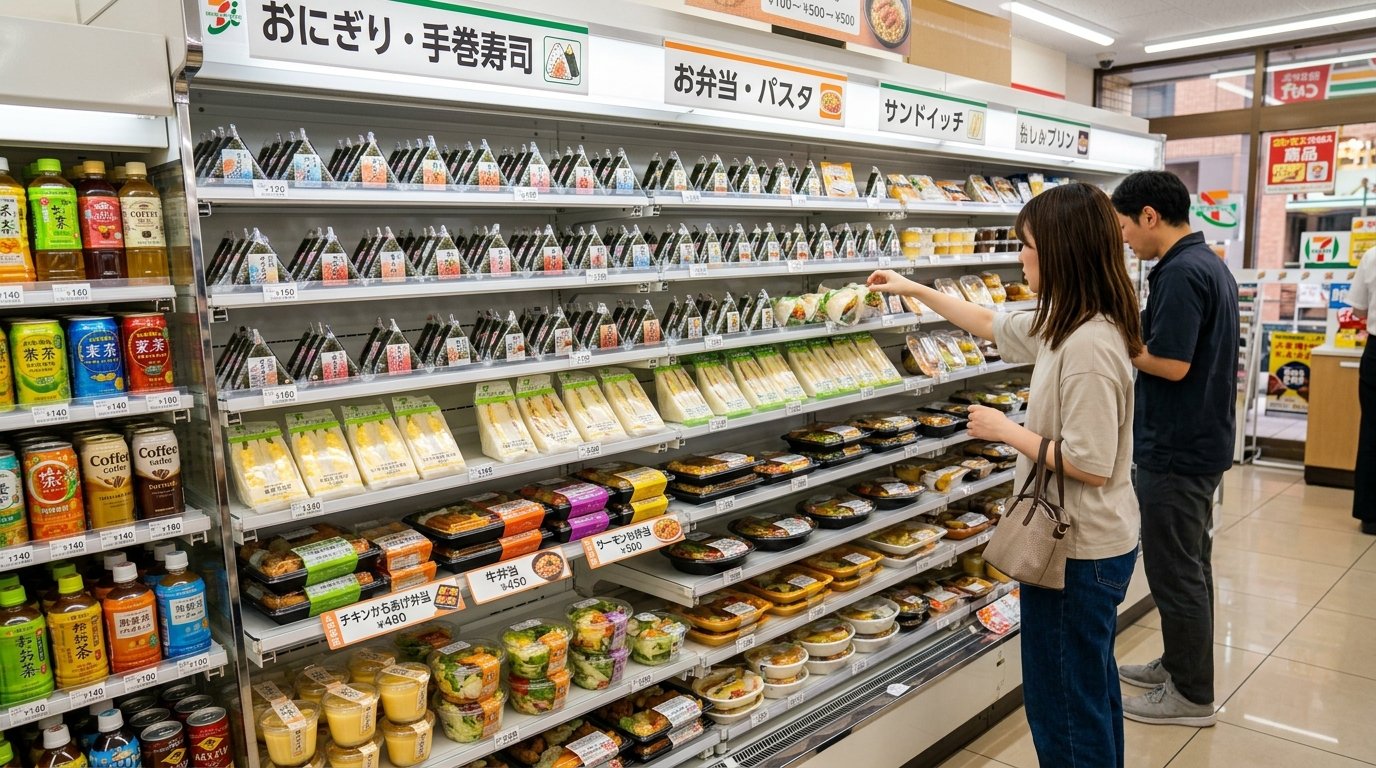
I was standing in a Shibuya convenience store at 11:47pm, clutching a ¥500 coin and staring at the most beautiful sandwich I’d ever seen. Thick katsu, perfectly crispy. Fluffy milk bread. For $3.20.
That moment crystallized everything about Japan budget travel that the internet gets wrong. Everyone told me I’d need $150+ per day. That Japan was impossibly expensive. That I should wait until I had a “real” travel budget.
Those people have clearly never eaten a convenience store katsu sandwich at midnight.
I spent 21 days in Japan in November 2023 for exactly $1,847. That’s $87.95 per day, including flights from Austin. I stayed in decent places, ate incredible food, took the shinkansen twice, and never once felt like I was roughing it or missing out.
The catch? You have to be smart about three things: timing, accommodation strategy, and food choices. Most travelers mess up at least two of these — which is why they blow through $200 a day while I’m over here living my best life for half that.
By the end of this guide, you’ll have my exact 21-day itinerary, daily cost breakdown, and the specific apps and strategies that made $87/day possible in one of the world’s most “expensive” countries.
Table of Contents
- The Real Numbers: My 21-Day Japan Budget Breakdown
- Flights: How I Got to Tokyo for $387
- Accommodation Strategy: $23/Night Average
- Food Budget: Eating Well for $25/Day
- Transportation: JR Pass vs. Individual Tickets
- My Exact 21-Day Itinerary
- Money-Saving Apps and Tools That Actually Work
- FAQ: Japan Budget Travel Questions
The Real Numbers: My 21-Day Japan Budget Breakdown
Here’s what I actually spent, down to the last yen.
Total Trip Cost: $1,847
– Flights (Austin to Tokyo roundtrip): $387
– Accommodation (21 nights): $492
– Food: $531
– Transportation: $287
– Activities/Sights: $98
– Miscellaneous: $52
That works out to $87.95 per day for everything. Not per day once you’re there — per day including the flight.
Most japan budget travel guides inflate their numbers by excluding flights or using outdated exchange rates. I’m giving you the real math from my actual bank statements.
Why November 2023 Was Perfect Timing
The yen was sitting at 149 to the dollar — basically a 30% discount compared to pre-2020 rates. However, that’s not the only reason my costs stayed low. I traveled during shoulder season (avoiding cherry blossom madness and summer festivals), which meant accommodation was 40-60% cheaper than peak times.
But here’s what nobody mentions about japan budget travel timing: avoid Golden Week (late April/early May), Obon (mid-August), and New Year. Not just because of crowds — because accommodation prices literally triple.
The sweet spot? Late November through early December, or January through mid-March. You’ll get the best exchange rate impact AND reasonable accommodation prices.
Flights: How I Got to Tokyo for $387
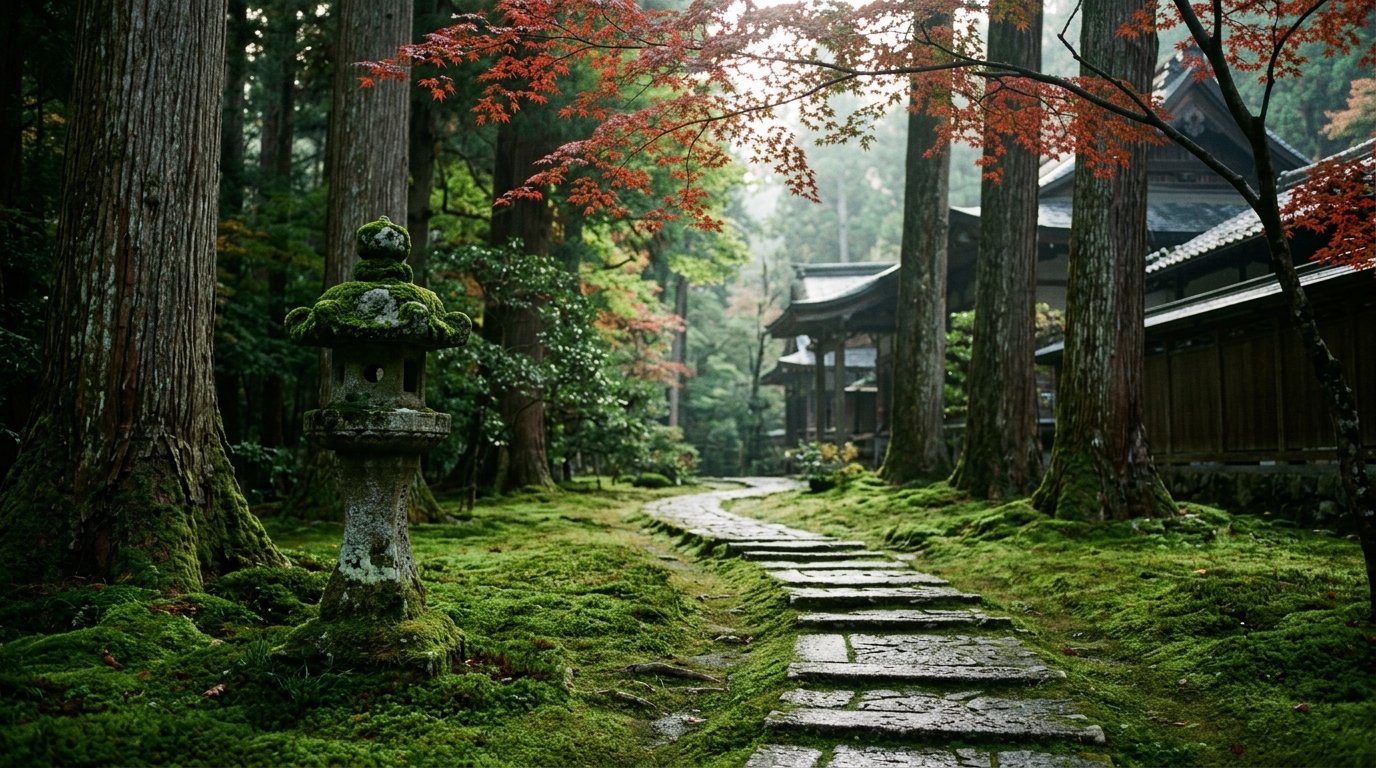
Most people search “Austin to Tokyo” and book whatever pops up first. I paid $387 roundtrip by being slightly smarter about it.
My actual routing: Austin → Dallas → Seoul → Tokyo on American/Korean Air. Total travel time: 19 hours with connections. Was it fun? No. Did it save me $400+ compared to direct flights? Absolutely.
The trick isn’t just being willing to connect — it’s knowing which connection cities work best for Japan. Seoul, Taipei, and Vancouver consistently offer the cheapest routes from most US cities. Singapore works too, but usually adds unnecessary travel time.
The Search Strategy That Actually Works
I used Google Flights with two specific settings most people ignore:
1. Flexible dates view — I searched a full month, not specific dates
2. Nearby airports — included Houston (IAH) in my search, which sometimes has better Korean Air deals
The cheapest day was Tuesday, November 14th departure. But here’s the thing about japan budget travel and flights — don’t get too hung up on the “Tuesday is cheapest” myth. In my experience, the day of week matters way less than booking 6-8 weeks out and being flexible with your exact dates.
For context, finding cheap flights under $200 applies to international routes too, though you’re obviously not hitting $200 to Japan from the US.
One more thing: book directly with the airline once you find your price on Google Flights. Korean Air’s website was $12 cheaper than booking through Expedia for the exact same flights.
Accommodation Strategy: $23/Night Average
I spent $492 total on accommodation across 21 nights. That’s $23.43 per night average — in a country where most hotels start at $80+.
The secret isn’t staying in terrible places. It’s understanding Japan’s accommodation landscape better than most tourists.
My Three-Tier System
Hostels (9 nights): $14-18/night
Used these in Tokyo, Kyoto, and Hiroshima. Japanese hostels are ridiculously clean and well-organized compared to Europe. Plus, most have common areas where you’ll meet other travelers doing similar japan budget travel routes.
Best hostels I stayed at:
– Khaosan Tokyo Laboratory (Asakusa): ¥2,100/night ($14), incredible location
– Piece Hostel Kyoto (Sanjo): ¥2,400/night ($16), walking distance to everything
– J-Hoppers Hiroshima Guesthouse: ¥2,700/night ($18), breakfast included
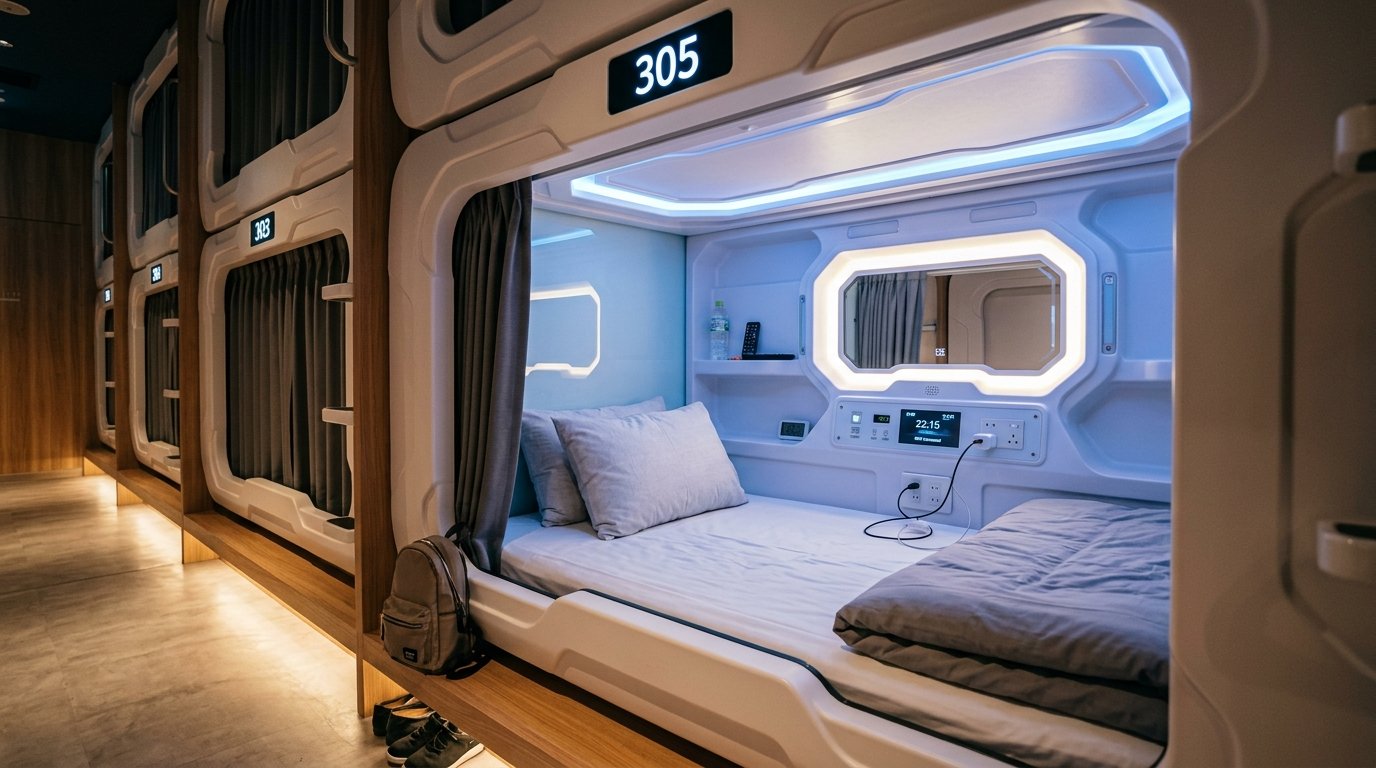
Capsule Hotels (6 nights): $28-35/night
These aren’t just a novelty — they’re genuinely comfortable and often cheaper than business hotels. The ones I picked all had proper bathrooms, lockers, and common areas.
Budget Business Hotels (6 nights): $25-40/night
Used Booking.com filters aggressively. Sorted by price, filtered for 7.5+ ratings, and looked specifically for hotels near train stations but not in the main tourist areas.
The Booking Timeline That Saves Money
I booked everything 6 weeks before departure, which seems to be the sweet spot for japan budget travel accommodation. Too early and you’re paying peak rates. Too late and availability disappears, forcing you into expensive last-minute options.
However, I left 3 nights unbooked intentionally — one each in Tokyo, Kyoto, and Osaka. This let me extend stays in places I loved or leave early if I wasn’t feeling a city. The flexibility was worth potentially paying $5-10 more per night for those few nights.
Honestly, the hostel vs hotel comparison applies even more in Japan, where hostels maintain incredibly high standards but hotels can be prohibitively expensive.
Food Budget: Eating Well for $25/Day
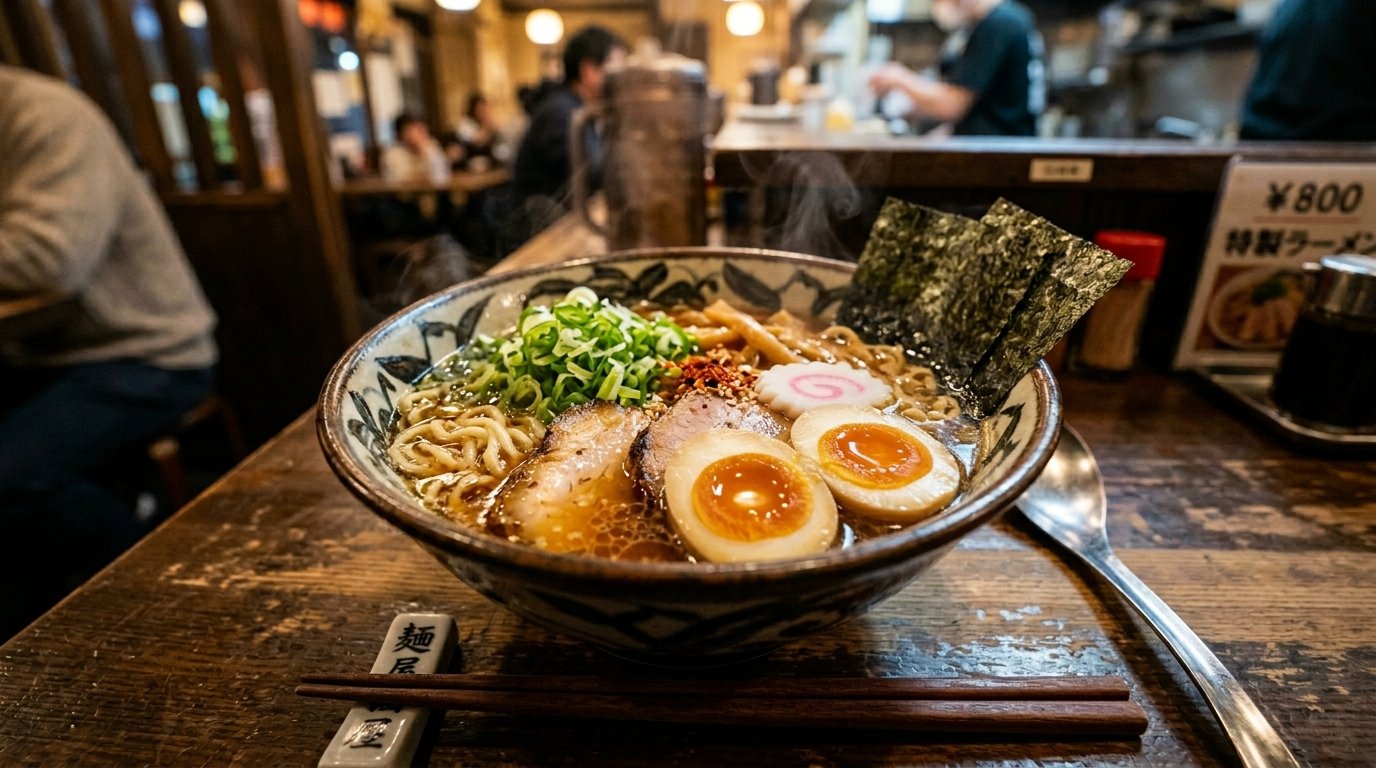
I spent $531 on food over 21 days. That’s $25.29 per day — and I ate incredibly well.
The conventional wisdom about Japan budget travel and food is completely backwards. Everyone tells you to stick to convenience stores and avoid restaurants. That’s nonsense. Convenience stores are great, but Japanese restaurants are often cheaper AND better than tourist-focused spots.
My Daily Food Strategy
Breakfast: $3-5
Convenience store every single day. Coffee (¥120), onigiri (¥140), and sometimes a pastry (¥160). Total: about ¥400-500 ($2.70-3.40).
Japanese convenience store breakfast beats hotel breakfast every time. The onigiri alone are better than most “continental breakfast” spreads in US hotels.
Lunch: $8-12
This is where most japan budget travel advice falls apart. Instead of avoiding restaurants, I targeted specific types:
– Teishoku sets at family restaurants: ¥800-1,200 ($5.50-8)
– Ramen shops (not tourist ones): ¥600-900 ($4-6)
– University area restaurants: Always 20-30% cheaper than tourist zones
– Department store restaurant floors: Fixed-price lunch sets, usually ¥1,000-1,500
Dinner: $12-18
Same strategy as lunch, but I’d splurge occasionally on kaiseki or higher-end places. My most expensive dinner was ¥4,200 ($28) for incredible sushi in Tsukiji. My cheapest was ¥420 ($2.80) for yakitori and beer at a standing bar in Shibuya.
The Apps That Actually Help
Tabelog (Japanese Yelp): Set location, filter by price range. Ignore the English reviews — sort by Japanese reviews and look for places with 3.5+ ratings and lots of reviews.
Google Translate camera function: Game-changer for menus. Point your phone at any menu and it translates in real-time.
The key insight about food and japan budget travel? Avoid anywhere with English menus in tourist areas, but don’t avoid restaurants entirely. The best value spots are family restaurants in residential neighborhoods — places that exist for locals, not travelers.
Transportation: JR Pass vs. Individual Tickets
I spent $287 total on transportation. No JR Pass.
Let me be crystal clear about this: the 21-day JR Pass costs $438. I spent $287 on individual tickets and local transport combined. The JR Pass wasn’t even close to worth it for my itinerary.
When the JR Pass Makes Sense (Spoiler: Rarely)
The JR Pass pays for itself IF you’re doing specific long-distance routes:
– Tokyo-Kyoto-Osaka-Hiroshima-Tokyo in under 14 days
– Multiple shinkansen trips per week
– Lots of day trips to cities 2+ hours away
For most japan budget travel itineraries — where you’re spending 3-5 days per city — individual tickets are way cheaper.
My Actual Transportation Costs
Shinkansen tickets: $127 total
– Tokyo to Kyoto: ¥5,940 ($40)
– Kyoto to Hiroshima: ¥6,750 ($46)
– Hiroshima to Tokyo: ¥6,120 ($41)
Local transport (buses, subways, local trains): $160 total
– Tokyo Metro 72-hour passes: ¥1,500 each ($10) — bought 3
– Kyoto city buses: ¥230 per day ($1.50) — unlimited day pass
– IC card top-ups for random trips: ~¥8,000 total ($54)
The math is simple: three shinkansen rides cost $127. A 21-day JR Pass costs $438. Unless I was taking 6+ long-distance train rides, individual tickets were always cheaper.
For comparison, budget travel in Europe often makes rail passes worthwhile because you’re covering much longer distances between countries. In Japan, the distances are shorter and individual tickets make more sense for budget travelers.
My Exact 21-Day Itinerary
Here’s day-by-day what I did and what it cost. This isn’t a “here’s what you should do” list — it’s my actual schedule with real expenses.
Tokyo (Days 1-8): $58/day average
Days 1-2: Jetlag and Exploration
Stayed in Asakusa near Sensoji Temple. Walked everywhere, ate convenience store meals, visited free temples and parks. Daily cost: $41 (mostly accommodation and food).
Day 3: Tsukiji and Ginza
Early morning at Tsukiji Outer Market (¥2,400 for incredible sushi breakfast), walked through Ginza (free), evening in Shimbashi yakitori alleys (¥1,800). Daily cost: $52.
Day 4: Shibuya and Harajuku
Shibuya Crossing (free), Meiji Shrine (free), crepes in Harajuku (¥650), dinner at standing bar (¥1,200). Daily cost: $48.
Days 5-6: Museums and Culture
Tokyo National Museum (¥1,000), Ueno Park (free), various temples and gardens. Splurged on nice dinner one night (¥4,200). Average daily cost: $67.
Days 7-8: Day Trips
Nikko day trip (¥2,400 train + ¥1,500 sights), Kamakura day trip (¥1,800 train + ¥800 temple fees). Daily cost average: $73.
Kyoto (Days 9-15): $51/day average
The lower daily cost here reflects cheaper accommodation and my growing expertise in finding good, cheap meals.
Days 9-10: Eastern Kyoto
Fushimi Inari (free), Kiyomizu-dera (¥400), philosopher’s path (free), countless small temples. Eating lots of tofu kaiseki sets (¥1,200-1,800). Daily cost: $47.
Days 11-12: Arashiyama
Bamboo grove (free), monkey park (¥550), temples, traditional lunch (¥1,600). Day trip to Nara (¥1,200 transport, ¥500 food). Daily cost: $54.
Days 13-15: Central and Northern Kyoto
Golden Pavilion (¥400), Ryoan-ji (¥500), walking through Gion (free), tea ceremony experience (¥2,500 — my one big splurge). Daily cost average: $52.
Hiroshima and Miyajima (Days 16-18): $62/day average
Day 16: Travel and Arrival
Shinkansen to Hiroshima, checked into hostel, visited Peace Memorial Museum (¥200), walked through Peace Park (free). Okonomiyaki for dinner (¥1,100). Daily cost: $68.
Day 17: Miyajima Island
Ferry to island (¥360), Itsukushima Shrine (¥300), hiking Mount Misen (free), island seafood lunch (¥2,400). Daily cost: $58.
Day 18: Hiroshima Castle and Gardens
Castle visit (¥370), Shukkeien Garden (¥260), farewell dinner at high-end teppanyaki (¥3,800). Daily cost: $61.
Return to Tokyo (Days 19-21): $71/day average
Higher costs due to last-minute souvenir shopping and farewell meals.
Days 19-20: Tokyo Revisit
Stayed in different neighborhood (Shibuya), revisited favorite spots, tried restaurants I’d bookmarked earlier. Shopping in Akihabara and Nakamise. Daily cost average: $69.
Day 21: Departure
Airport transport (¥1,240), last convenience store meal (¥520), flight home. Daily cost: $74.
Money-Saving Apps and Tools That Actually Work
After 21 days of japan budget travel, these are the apps that actually saved me money — not just provided “helpful information.”
Essential Apps (Free)
Google Translate with camera: Saved me $100+ by helping me order from Japanese-only menus instead of tourist-priced English menus. The real-time camera translation works about 85% of the time.
Hyperdia: Train route planning. More accurate than Google Maps for Japanese trains and shows exact prices before you travel.
Tabelog: Japanese restaurant reviews. Set your location, filter by price, sort by rating. Skip anywhere under 3.5 stars or with fewer than 50 reviews.
IC Card Apps: Tokyo Metro and other local transport apps let you load money digitally instead of figuring out ticket machines every time.
Paid Apps Worth It
Pocket WiFi rental: $47 for 21 days through Japan Wireless. Way cheaper than international roaming and more reliable than hunting for free WiFi.
Websites That Actually Save Money
Willer Express: Overnight buses between cities. Tokyo to Kyoto overnight bus costs ¥2,400 vs ¥5,940 shinkansen. Not comfortable, but saves a hotel night too.
Booking.com: Best interface for Japanese accommodations. Hostelworld is decent for hostels, but Booking.com has better business hotel selection and clearer cancellation policies.
Japan-Guide.com: Not an app, but the most accurate attraction hours, prices, and seasonal information. Saved me from wasted trips to closed temples multiple times.
The biggest mistake I see with japan budget travel is people downloading 15 travel apps and using none of them effectively. Pick 4-5 that solve specific problems and actually use them.
FAQ: Japan Budget Travel Questions
Is $2,000 realistic for 3 weeks in Japan?
Yes, but you need to be strategic about timing, accommodation, and food choices. My $1,847 total was during shoulder season (November) with the yen at 149 to the dollar. During peak season (cherry blossom, summer festivals), expect to add $300-500 to this budget.
Should I get a JR Pass for budget travel in Japan?
Probably not. The 21-day JR Pass costs $438. Unless you’re taking 6+ long shinkansen rides, individual tickets are cheaper. For my itinerary (3 shinkansen rides), I saved $151 by skipping the pass.
How much cash should I bring to Japan?
I brought $300 USD cash and withdrew more as needed. Japan is still largely cash-based, especially for small restaurants and local transport. Budget about ¥10,000 ($67) cash per week for daily expenses, plus keep ¥5,000 emergency buffer.
Are hostels in Japan actually good?
Japanese hostels are significantly cleaner and better organized than European hostels. They’re not party places — they’re designed for budget-conscious travelers who want decent sleep and storage. Expect pods or curtained bunks, not open dorm chaos.
What’s the real daily budget for Japan?
For japan budget travel similar to my trip: $85-90/day including accommodation and flights. If you’re already there and flights are paid for, $65-70/day covers accommodation, food, transport, and activities comfortably during shoulder season.
Can you eat well on a budget in Japan?
Absolutely. Skip tourist restaurant districts and English menus. Family restaurants, university areas, and department store restaurant floors offer incredible food at ¥800-1,500 per meal. Convenience stores aren’t just backup options — they’re legitimately good for breakfast and snacks.
Is November a good time for budget travel to Japan?
Perfect timing. Post-autumn colors, pre-winter crowds, shoulder season accommodation prices, and excellent weather for walking around cities. Cherry blossom season looks prettier in photos but costs 40-60% more for the same experience.
What’s the biggest mistake budget travelers make in Japan?
Buying the JR Pass automatically without calculating whether they’ll actually use it enough to justify the cost. Second biggest: staying in tourist areas and paying tourist prices for everything instead of learning how local pricing works.
Ready to Plan Your Own Japan Budget Travel Adventure?
Three weeks in Japan for under $2,000 isn’t just possible — it’s comfortable if you make smart choices about timing, accommodation, and food.
The biggest mindset shift? Stop thinking of Japan as prohibitively expensive and start treating it like any other destination where local knowledge beats tourist spending. My $87/day average proves that japan budget travel doesn’t mean suffering through convenience store meals and sketchy hostels.
It means understanding that a ¥600 bowl of ramen from a local shop tastes better than a ¥2,400 “authentic experience” in Shinjuku. That capsule hotels aren’t tourist gimmicks — they’re practical solutions invented for budget-conscious Japanese travelers. That the JR Pass is marketing, not math.
Start planning your trip 6-8 weeks out, during shoulder season if possible, and remember — the best travel experiences happen when you stop trying to avoid the country you’re visiting and start learning how it actually works.
Your ¥500 convenience store katsu sandwich at midnight is waiting.