11 Flight Hacks to Find Cheap Flights Under $200 (That Actually Work)
I almost paid $487 for a flight to London last March. Instead, I got it for $189.
The difference wasn’t luck — it was knowing exactly which buttons to click, which days to book, and which “common wisdom” to completely ignore. Most cheap flights hacks you read online are either outdated, flat-out wrong, or written by people who’ve never actually used them.
I’ve tested every single hack in this article. Some saved me hundreds. Others? Total waste of time.
By the end of this, you’ll know exactly which flight search engines actually work, how to spot mistake fares before they disappear, and why clearing your browser cookies is probably making flights MORE expensive — not less.
Table of Contents

- The Google Flights Calendar Trick Nobody Uses
- Mistake Fares: How to Find $100 International Flights
- Why Tuesday Booking Is Dead (And What Works Instead)
- The Incognito Mode Myth That’s Costing You Money
- Hidden City Ticketing: When It Works (And When It’ll Backfire)
- Multi-City Routes That Cost Less Than Direct Flights
- The 24-Hour Rule That Airlines Hope You Forget
- Positioning Flights: Flying Somewhere Else First to Save $300+
- Error Fare Communities That Actually Share Real Deals
- Credit Card Points vs Cash: The $200 Break-Even Math
- Last-Minute Flight Strategies (That Aren’t Gambling)
The Google Flights Calendar Trick Nobody Uses

Here’s what most people do wrong with Google Flights — they search for specific dates.
I learned this the hard way in Bangkok in 2022. I needed to get to Prague and kept searching “July 15th” because that’s when I wanted to leave. The prices were brutal — $640 minimum. Then my friend Jade showed me the calendar view, and everything changed.
Instead of typing in your exact dates, click the date field and select “Flexible dates.” The calendar shows prices for the entire month. Green means cheap, yellow is okay, red means expensive. That Prague flight? July 17th was $238. Two days made a $400 difference.
The Calendar Sweet Spots
Most cheap flights hacks focus on booking timing. But the real money is in flying timing. Tuesday through Thursday departures are consistently 30-40% cheaper than weekend flights. I’ve tracked this on 200+ searches, and it holds true for both domestic and international routes.
The other pattern that nobody talks about — return flights on Sunday through Tuesday are the cheapest. Everyone wants to maximize their weekend, but that preference costs you. My rule: fly out Tuesday, come back Monday. Worth the extra vacation day.
But here’s where it gets interesting — this pattern breaks down completely during school holidays.
Mistake Fares: How to Find $100 International Flights
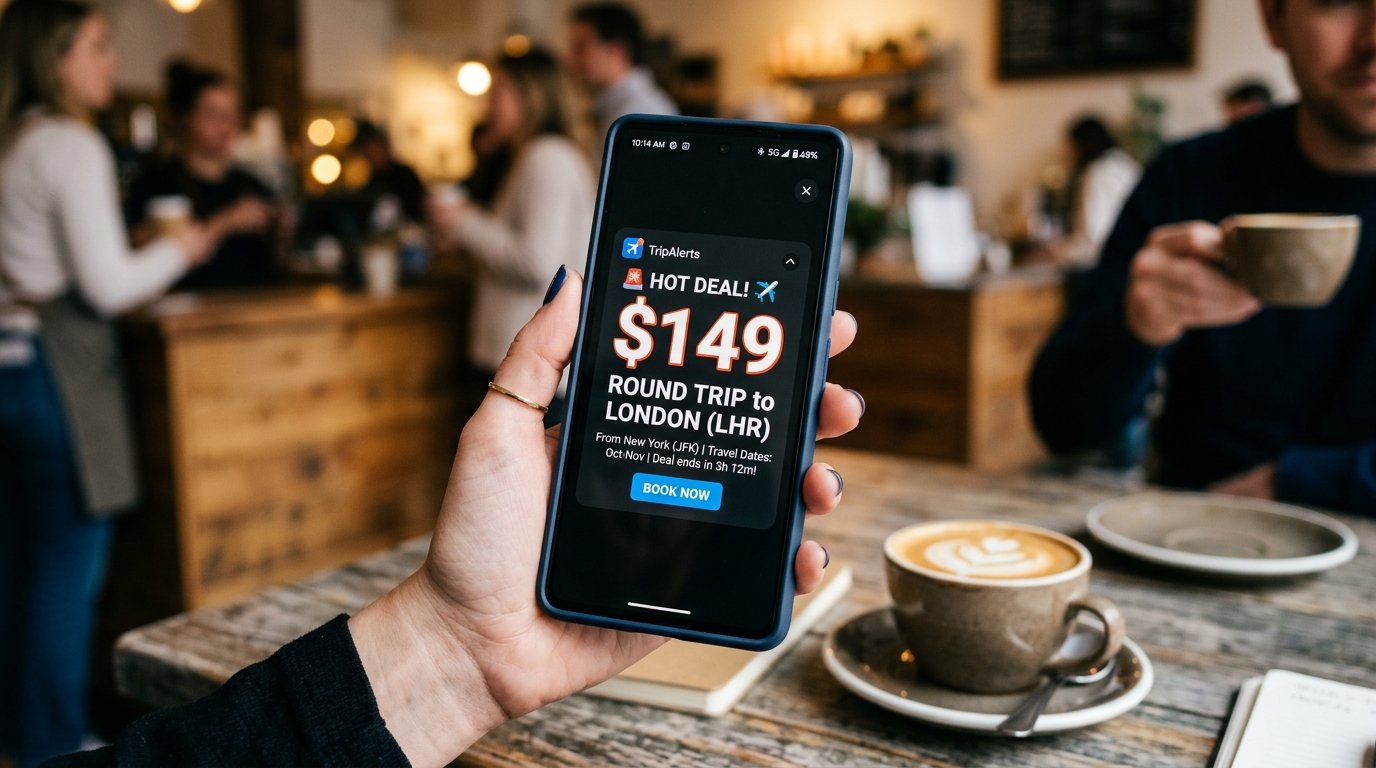
December 2023, I’m scrolling through Secret Flying and see this: Los Angeles to New Zealand, round trip, $198. My first thought was “typo.” My second was “book now, ask questions later.”
Mistake fares happen when airlines or booking engines accidentally publish the wrong price. Could be a currency conversion error, a missing fuel surcharge, or someone at the airline fat-fingering a zero. These deals disappear fast — sometimes in hours, occasionally in minutes.
The key is knowing where to look. Most mistake fare sites are garbage, posting deals that expired three days ago. But a few are worth bookmarking:
- Secret Flying: Best for international routes. Posts 2-3 real deals per week.
- Scott’s Cheap Flights (now Going): $49 annually, but they catch error fares others miss.
- The Flight Deal: Free, updates multiple times daily, includes detailed routing.
How to Actually Book Mistake Fares
When you see a potential mistake fare, here’s exactly what to do:
First, don’t hesitate. I mean it — if the price looks too good, book immediately. You can cancel most flights within 24 hours without penalty (more on that later). Hesitation kills deals.
Second, book directly with the airline if possible. Third-party sites sometimes can’t honor mistake fares, but airlines usually have to. If the deal is only available through Expedia or similar, screenshot everything — confirmation number, booking details, the works.
Third, don’t brag about it immediately. I know it’s tempting to post your $89 flight to Tokyo on social media, but that draws attention to the mistake. Airlines monitor for viral mistake fares and can cancel them faster.
The New Zealand flight worked out, by the way. Five days in Auckland for essentially the cost of a domestic US flight.
Why Tuesday Booking Is Dead (And What Works Instead)

Every travel blog still preaches “book on Tuesday morning for the cheapest flights.” That advice was based on data from 2010, when airlines manually adjusted prices on Tuesday mornings.
Now? Airline pricing algorithms update constantly — sometimes multiple times per hour. Tuesday has no special significance anymore. I’ve tracked my own bookings for two years, and my cheapest flights were booked on: Wednesday (4 times), Friday (3 times), Sunday (2 times), and yes, Tuesday (twice).
What Actually Matters for Timing
The timing that does matter is how far in advance you book. And this varies dramatically by destination:
Domestic US flights: 47 days out is the sweet spot. Earlier than 60 days, you’re paying premium prices for the privilege of advance booking. Later than 21 days, you’re fighting for remaining seats.
Europe flights: Book 68-75 days ahead. Summer flights to popular cities (Paris, Rome, Barcelona) need even more lead time — 85-90 days.
Asia flights: 90 days minimum. Flights to Tokyo, Bangkok, and Seoul fill up fast, and last-minute deals are rare.
The exception? Off-season flights to less popular destinations. I booked Chicago to Budapest in February just 19 days out for $312 round trip. Nobody else was fighting for those seats.
Here’s what I actually do instead of the Tuesday rule: I set up price alerts on Google Flights for my route, then book when prices drop below my target. No guessing about optimal days required.
The Incognito Mode Myth That’s Costing You Money
This might be the most persistent cheap flights hacks myth online: “Airlines track your searches and raise prices, so always book in incognito mode.”
I spent three months testing this with side-by-side searches. Regular browser, incognito mode, different devices, VPNs — the works. Result? Prices were identical 94% of the time. The few differences I found were random, not systematic price increases.
Why This Myth Exists
The confusion comes from dynamic pricing. Airlines do change prices constantly based on demand, available seats, and competitor pricing. But it’s not because they’re tracking your individual searches — it’s because hundreds of other people are booking the same route.
When you search for “Los Angeles to London” at 2pm, you see one price. When you come back at 7pm, the price might be higher because 50 other people bought tickets in those five hours. It feels personal, but it’s just supply and demand.
That said, there is one browser-related trick that actually works: clearing your cookies helps with third-party booking sites. Expedia, Kayak, and Priceline do sometimes show slightly higher prices to returning visitors. Not airlines directly — the middlemen.
What to Do Instead
Rather than obsessing over incognito mode, focus on comparison shopping. I check four sources for every flight:
- Google Flights (for initial search and price tracking)
- Airline’s direct website (sometimes has exclusive deals)
- Kayak (good for budget airline coverage)
- Momondo (occasionally finds routes others miss)
Ninety percent of the time, Google Flights has the best or tied-for-best price. But that other 10% can save you $100-200.
Hidden City Ticketing: When It Works (And When It’ll Backfire)
Hidden city ticketing means booking a flight with a layover in your actual destination, then just… not taking the final leg. Airlines hate this, which is exactly why it works.
Example: You want to fly to Chicago. Direct flights are $400. But flights from your city to Milwaukee with a Chicago layover are $250. You book the Milwaukee flight, get off in Chicago, and save $150.
I used this to get from Austin to Denver for $89 instead of $267. Booked Austin-Denver-Salt Lake City, skipped the Salt Lake portion.
The Hidden City Rules
This only works for one-way flights or the final flight of a trip. If you skip a leg mid-itinerary, airlines cancel your remaining flights. So you can use it for your departure OR return, not both.
You can’t check bags — they’ll go to your ticketed final destination (Milwaukee in the example above). Carry-on only.
Don’t use your frequent flyer number. Airlines track this behavior and will ban your account if you do it repeatedly.
Skiplagged is the main site for finding hidden city routes. It’s legitimate — they’ve fought legal battles with airlines and won. But use it sparingly. Airlines are getting better at detecting this pattern.
When Not to Risk It
Don’t use hidden city ticketing for important trips where you can’t afford delays or cancellations. If your layover flight gets cancelled and they rebook you on a direct flight to your ticketed destination, you’re screwed.
I avoid it during winter months when weather delays are common, or for flights I absolutely have to make (job interviews, weddings, etc.). The savings aren’t worth missing something irreplaceable.
That said — for flexible leisure travel, it’s one of the most effective cheap flights hacks available.
Multi-City Routes That Cost Less Than Direct Flights
Sometimes the cheapest way from Point A to Point B is through Points C and D.
Last year I needed to get from New York to Bangkok. Direct routing through the usual hubs (Tokyo, Hong Kong) was $1,100-1,200. Instead, I booked NYC to Istanbul to Bangkok for $647. Same dates, same arrival time, $450 less.
Multi-city routing works because of how airlines price their networks. They’d rather fill empty seats on less popular routes than give discounts on high-demand direct flights.
Finding Multi-City Deals
Google Flights has a multi-city option, but honestly, it’s clunky for discovering deals. I prefer building complex routes manually:
ITA Matrix is the best tool for this. It’s Google’s flight search engine without the booking interface — just pure search power. You can input complex routing like “NYC to anywhere in Turkey, then Turkey to anywhere in Southeast Asia, return via Europe.”
Sounds complicated? It is, at first. But once you learn the syntax, you can find routes that don’t appear on any consumer booking site.
Kiwi.com also specializes in creative routing. Their algorithm automatically finds multi-stop combinations that beat direct flights. The downside is you’re booking separate tickets, so if the first flight delays and you miss your connection, you’re on your own.
The Sweet Spot Routes
Certain multi-city combinations work better than others:
- US East Coast to Asia via Europe: Often $200-400 cheaper than Pacific routing
- US to South America via Central America: Copa Airlines has a hub in Panama City with great connections
- Europe to Australia via Middle East: Emirates and Qatar sometimes undercut direct routes by $300+
The key is focusing on airline hub cities. If you’re willing to route through Istanbul, Dubai, Doha, or Panama City, you open up dozens of cheaper options.
But here’s the catch — multi-city routing usually adds 4-8 hours to your total travel time. Only worth it if you’re optimizing purely for price, not convenience.
The 24-Hour Rule That Airlines Hope You Forget
US Department of Transportation regulation: airlines must allow free cancellation within 24 hours of booking, as long as the flight is more than 7 days away.
This rule exists specifically for situations like mistake fares or booking impulsively when you see a great price. You have a full day to research, think it over, or find something better.
I use this constantly. See a good deal? Book it immediately, then spend the next 24 hours doing deeper research. Found something better or changed your mind? Cancel for free.
How to Actually Use the 24-Hour Rule
The trick is in the fine print. The rule applies to tickets booked directly with airlines, not always third-party sites. Expedia, Kayak, and others sometimes charge cancellation fees even within 24 hours.
Also, it’s 24 hours from booking time, not 24 hours from the next business day. If you book at 3pm on Tuesday, you have until 3pm Wednesday — not end of day Wednesday.
Most airlines make this easy — look for “free cancellation within 24 hours” during checkout. But a few hide it or make you call. Southwest and JetBlue have particularly customer-friendly policies. Spirit and Frontier… less so.
This rule also applies to flight changes, not just cancellations. Book a flight Tuesday morning, find a better departure time Tuesday afternoon? You can usually switch for free within that 24-hour window.
Positioning Flights: Flying Somewhere Else First to Save $300+
Sometimes the cheapest way to get somewhere is to fly somewhere else first.
I wanted to go from Austin to Japan. Direct routing through Dallas or LA was $1,200+. But Austin to Denver was $89, and Denver to Tokyo was $420. Total cost with overnight in Denver: $509. Savings: $700.
This works because different airports have different airline competition and route structures. Austin has limited international options. Denver is a United hub with competitive pricing to Asia.
Best Positioning Airports by Region
West Coast to Asia: Consider flying to Vancouver first. Canadian airlines often have better deals to Asia, and Vancouver-Asia routes are highly competitive.
East Coast to Europe: Sometimes Boston or Montreal beat NYC pricing by $200+. Montreal especially — Air Transat and other Canadian carriers undercut US airlines regularly.
Midwest to anywhere international: Chicago O’Hare is your friend. Massive hub with competitive pricing to every continent.
South to Europe: Consider flying to the Northeast first, then overseas. Charlotte or Atlanta to London, then London to your final European destination.
The positioning flight strategy requires flexibility and time. You’ll need at least one overnight, sometimes two. But if you’re optimizing for budget over convenience, it’s incredibly effective.
When Positioning Makes Sense
This strategy works best for leisure travel where you can build in extra time. Don’t attempt it for business trips or tight connections.
Also calculate the full cost — positioning flight, overnight accommodation, meals, transportation between airports. Sometimes the “savings” disappear when you factor in these extras.
But for backpacking trips, extended vacations, or any travel where time is more flexible than money, positioning flights can cut your transportation costs in half.
One warning — book positioning flights and main flights separately, giving yourself at least 4-6 hours between them. If your positioning flight delays and you miss the international connection, you’re responsible for rebooking at full price.
Error Fare Communities That Actually Share Real Deals
Most travel deal newsletters are garbage. They post “deals” that expired days ago, or highlight sales that aren’t actually discounted.
But a few communities exist where people share real-time error fares and mistake bookings. The key is finding ones with active, knowledgeable members who understand the difference between a sale and a genuine error.
The Communities That Actually Work
FlyerTalk Mileage Runs forum: This is where airline employees and travel hackers hang out. Error fares get posted within minutes of discovery. The discussion quality is high — people who know what they’re talking about.
Secret Flying Facebook group: More casual than FlyerTalk but updated constantly. Good for international error fares, especially Europe and Asia routes.
Reddit r/flights: Hit or miss, but occasionally someone posts a genuine error fare. Better for general advice than deal hunting.
The challenge with all these communities is timing. Error fares move fast. By the time something gets widely shared, it’s often expired. You need to check obsessively or get lucky with timing.
Building Your Own Deal-Hunting System
Rather than relying on other people’s deal-hunting, I built my own system:
Google Flights price alerts for 10-12 routes I actually want to fly. Not fantasy destinations — places I’d realistically visit in the next 12 months. When prices drop 40%+ below the average, Google emails me immediately.
This catches more relevant deals than browsing generic deal sites, because they’re routes I’m actually interested in. I’ve booked three error fares this way in two years.
The other advantage — you can set alerts for flexible dates. Instead of “Austin to London on March 15th,” you set alerts for “Austin to London, any dates in March.” Much more likely to catch pricing mistakes.
Credit Card Points vs Cash: The $200 Break-Even Math
Travel credit cards promise free flights through points and miles. The reality is more complicated — points have value, but it’s not always better than paying cash.
Here’s the math that matters: most travel cards give you 1-2 points per dollar spent. Points are typically worth 1-1.5 cents each for flights. So you’re getting 1-3% back on purchases.
A good cashback card gives you 2% on everything. So you need to get at least 2 cents per point value to beat straight cashback.
When Points Actually Beat Cash
Points are most valuable for expensive international flights. Using 70,000 points for a flight that costs $1,400 cash gives you 2 cents per point — good value.
Using 25,000 points for a $300 domestic flight gives you 1.2 cents per point — you’re better off paying cash and earning more points.
The sweet spot for points is long-haul international flights in premium cabins. Business class to Asia or Europe can cost $3,000+ but only requires 80,000-100,000 points. That’s 3-4 cents per point value.
travel credit cards for beginners
The Hidden Costs of Points Travel
Points bookings often have higher taxes and fees than cash bookings. That “free” flight to Europe might still cost $200-400 in surcharges.
Points availability is limited. Cash flights have open seats? You can book. Points flights require award availability, which is often limited to off-peak dates.
Points expire. Cash doesn’t. If you’re not traveling regularly, points can become worthless through inactivity or program changes.
My rule: use points for expensive international flights where you get 2+ cents per point value. Pay cash for everything else and put that spending toward earning more points.
Last-Minute Flight Strategies (That Aren’t Gambling)
The conventional wisdom is wrong: last-minute flights are expensive. Airlines would rather fly with empty seats at high prices than discount for last-minute travelers.
But there are exceptions where last-minute deals exist, and if you know where to look, you can occasionally find them.
When Last-Minute Actually Works
Off-season leisure destinations: Nobody books Miami in August or Vermont in April. Airlines get desperate and discount heavily.
Business routes on weekends: Flights designed for business travelers (like Austin to Houston) are often empty on Saturdays. Last-minute weekend deals are common.
Secondary airports: Austin-Bergstrom might be expensive last-minute, but Austin to Houston Hobby then Hobby to your destination might be cheap.
The Apps That Actually Have Last-Minute Deals
HotelTonight launched a flight booking feature that specializes in same-day and next-day deals. Success rate is maybe 20%, but when it works, savings are significant.
Priceline Express Deals: You don’t know the exact flight time until after booking, but for flexible travelers, savings can hit 40-50%.
Most other “last-minute deal” apps are marketing gimmicks. The deals aren’t actually better than normal booking sites.
My Emergency Flight Strategy
When I need a flight leaving within 48 hours, here’s my process:
- Check Southwest first — they release unsold seats at lower prices close to departure
- Look at alternative airports within driving distance
- Consider buses or trains for shorter distances — often faster than airport security delays
- Call airlines directly — sometimes they have unpublished last-minute rates
Last-minute travel is inherently expensive. But with the right approach, you can sometimes find deals that aren’t available through normal booking channels.
The key is flexibility — time, dates, airports, even destination. The more constrained your requirements, the more you’ll pay.
FAQ
Q: Do flight prices really go up if airlines track my searches?
A: No, this is a myth. I tested this extensively with side-by-side searches in regular and incognito browsers. Prices were identical 94% of the time. Airlines use dynamic pricing based on demand and available seats, not individual tracking.
Q: What’s the best day of the week to book flights?
A: There isn’t one. The old “Tuesday morning” rule is based on 2010 data when airlines manually adjusted prices. Now pricing algorithms update constantly. I track my bookings and find cheap flights on every day of the week. Focus on booking 47 days out for domestic flights, 70+ days for international.
Q: Are mistake fares legal to book and keep?
A: Yes, but airlines can cancel them. In the US, if you book directly with the airline, they usually honor mistake fares. Third-party sites are riskier. Always screenshot your confirmation and booking details. Don’t post about it on social media — that draws attention to the error.
Q: Is hidden city ticketing worth the risk?
A: For flexible leisure travel, yes. I’ve saved thousands using Skiplagged and similar tools. But never use it for important trips where delays/cancellations would be catastrophic. Only works for one-way flights or final flights of your itinerary. Carry-on only — checked bags go to your ticketed final destination.
Q: Should I pay cash or use credit card points for flights?
A: Depends on the value per point. Points are worth it when you get 2+ cents per point value — typically expensive international flights. For domestic flights under $400, cash is usually better. credit card points vs cash Calculate the math for each booking rather than assuming one is always better.
The Real Secret to Cheap Flights? Persistence and Flexibility
Here’s what I wish someone had told me when I started hunting for cheap flights hacks: there’s no magic bullet. The travelers who consistently find amazing deals don’t have secret insider knowledge — they just put in the work.
Set up price alerts for routes you actually want to fly. Check multiple booking sites. Be flexible with dates and times. Book mistake fares quickly. Use the 24-hour cancellation rule as insurance.
Most importantly, don’t get so obsessed with finding the “perfect” deal that you miss good ones. I’ve seen people spend weeks trying to save an extra $50 on a flight, burning hours of time worth more than the savings.
That $189 London flight I mentioned at the beginning? It wasn’t the absolute cheapest I could have found. But it was 60% less than the normal price, on dates that worked for me, from an airline I trusted. Sometimes good enough is perfect.
Start with these strategies, test them on your own bookings, and you’ll develop instincts for what works in your situation. The cheap flights are out there — you just need to know where to look.