ETIAS 2026: What Americans and British Travellers Need to Know Before Visiting Europe
I was standing in Charles de Gaulle Airport at 6:47am on what should have been the start of my Paris weekend when the border guard looked at me like I’d grown a second head.
“Where is your ETIAS authorization?”
My what now?
That was October 2025 — three weeks before the system officially launched. I’d completely missed the memo that Americans would need pre-travel approval to enter Europe starting in 2026. Cost me a €180 rebooking fee and eight hours in airport purgatory while I frantically applied on my phone.
Don’t be me. ETIAS 2026 guide rules change everything for American, British, Canadian, and Australian travellers heading to Europe. The European Travel Information and Authorization System isn’t a visa, but it’s mandatory. And if you don’t have it, you’re not getting on that plane.
Here’s what’s actually happening, how much it costs, and exactly when you need to apply — plus the one mistake that’ll get your application rejected instantly.
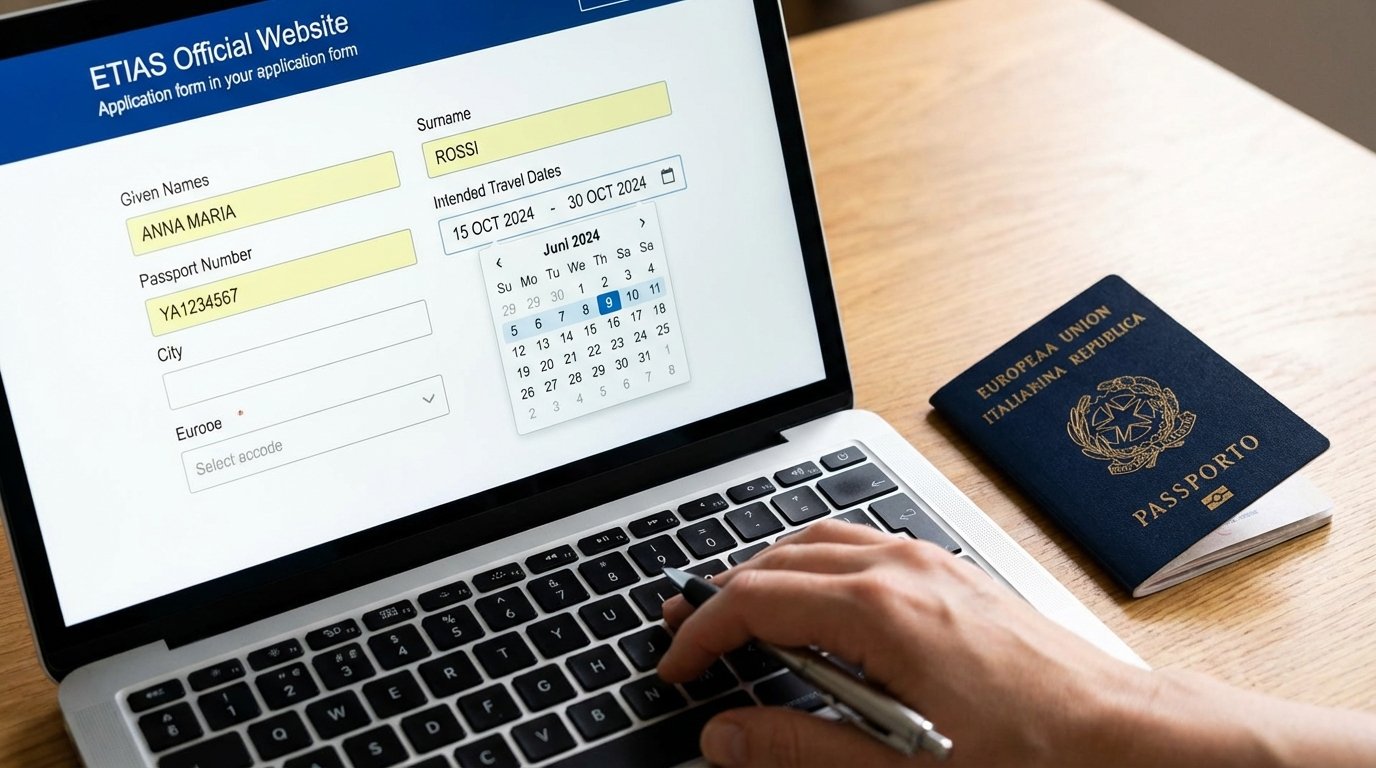
Table of Contents
- What Is ETIAS and Why It Exists
- Who Needs ETIAS Authorization
- ETIAS Application Process Step-by-Step
- Costs and Processing Times
- Common Application Mistakes to Avoid
- What Happens at European Borders
- FAQ
What Is ETIAS and Why It Exists
ETIAS stands for European Travel Information and Authorization System.
Think of it as Europe’s version of the US ESTA program. You’re not applying for a visa — you’re getting pre-clearance to enter 30 European countries for tourism, business, or transit stays under 90 days.
The system launched January 1, 2026, but here’s the thing most ETIAS 2026 guide articles won’t tell you: there’s a six-month grace period. Until July 1, 2026, you can still enter Europe without ETIAS. After that? No authorization, no entry. Period.
Why did Europe do this? Security screening, basically. The EU wants to know who’s coming before they arrive, not just when they hit passport control. Fair enough — the US has been doing this to European visitors since 2009.
But here’s where it gets interesting.
The European Commission estimates 1.4 billion travellers will need ETIAS authorization over the next decade. That’s a lot of people who don’t know this system exists yet. Which means airports are going to be chaos for the first few months as travellers get turned away at check-in.
My advice? Don’t wait for the grace period to end.
Who Needs ETIAS Authorization

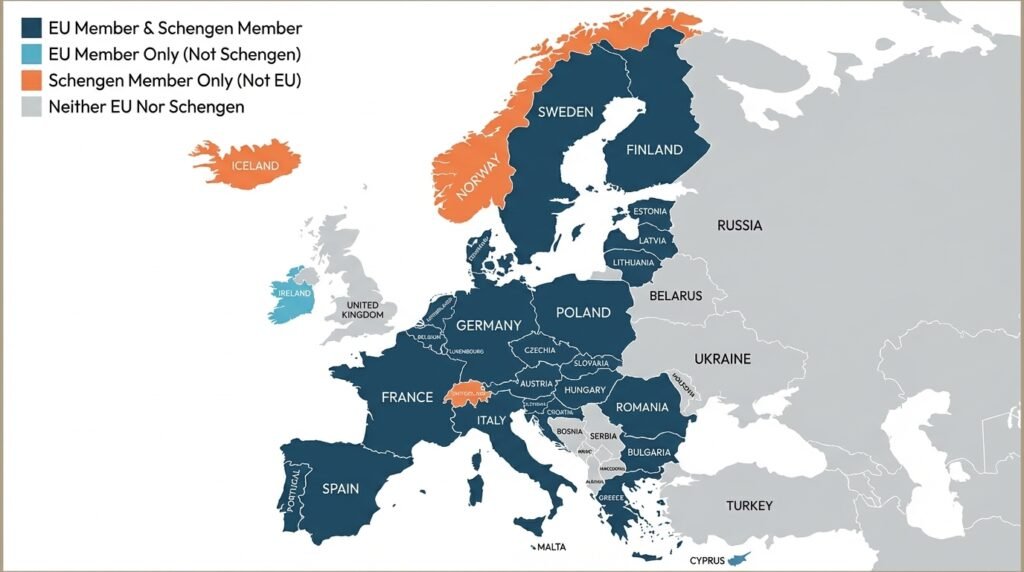
Every US, UK, Canadian, Australian, and New Zealand citizen needs ETIAS to visit these 30 countries:
Schengen Area (26 countries):
Austria, Belgium, Czech Republic, Denmark, Estonia, Finland, France, Germany, Greece, Hungary, Iceland, Italy, Latvia, Lithuania, Luxembourg, Malta, Netherlands, Norway, Poland, Portugal, Slovakia, Slovenia, Spain, Sweden, Switzerland, Croatia, Liechtenstein
Plus these 4 non-Schengen countries:
Bulgaria, Cyprus, Romania, Ireland
The system covers everyone from 18 to 70 years old. Under 18 or over 70? You’re exempt from the €7 fee but still need to apply.
Here’s what counts as needing ETIAS:
– Tourism (yes, even a weekend in Paris)
– Business meetings under 90 days
– Transit through European airports
– Visiting family or friends
What doesn’t need ETIAS:
– EU citizens (obviously)
– Legal residents of EU countries
– Diplomatic passport holders
– Some humanitarian cases
I know someone’s thinking: “But I have dual citizenship with an EU country!” Lucky you. Use your EU passport and skip this entire process.
Everyone else — you’re in the ETIAS system now.
ETIAS Application Process Step-by-Step
The official ETIAS application site goes live at eu-etias.com in January 2026. Don’t use third-party sites charging $47 or whatever — the real cost is €7.
Before You Start:
– Valid passport (must be valid for at least 3 months beyond your planned departure from Europe)
– Email address
– Debit/credit card
– Employment details (current job title and employer name)
– First planned accommodation in Europe (hotel name and address)
The Actual Application (takes 10-15 minutes):
- Personal Information
Full name, date of birth, place of birth, nationality, gender, address - Passport Details
Passport number, issue date, expiration date, issuing authority - Contact Information
Email, phone number, home address - Background Questions
This is where people get nervous, but it’s straightforward:
– Criminal convictions in the past 20 years?
– Ever been refused entry to any country?
– Present in areas of armed conflict in the past 10 years?
– Ordered to leave any country’s territory? - Travel Information
First EU country you’ll enter, accommodation details, purpose of travel - Payment
€7 fee via card payment
Hit submit. You’ll get a confirmation email immediately.
Most applications get approved within minutes. Some take up to 72 hours. A tiny percentage get flagged for additional review, which can take up to 30 days.
But here’s the critical part: you get approved or denied. There’s no “maybe” or “apply again in 6 months.” If denied, you need to apply for a full Schengen visa at a consulate. That’s a different process entirely — more paperwork, higher fees, in-person appointments.
Costs and Processing Times

ETIAS Authorization Costs:
– Adults (18-70): €7
– Minors (under 18): Free
– Seniors (over 70): Free
Seven euros. That’s it. Roughly $7.50 USD at current exchange rates.
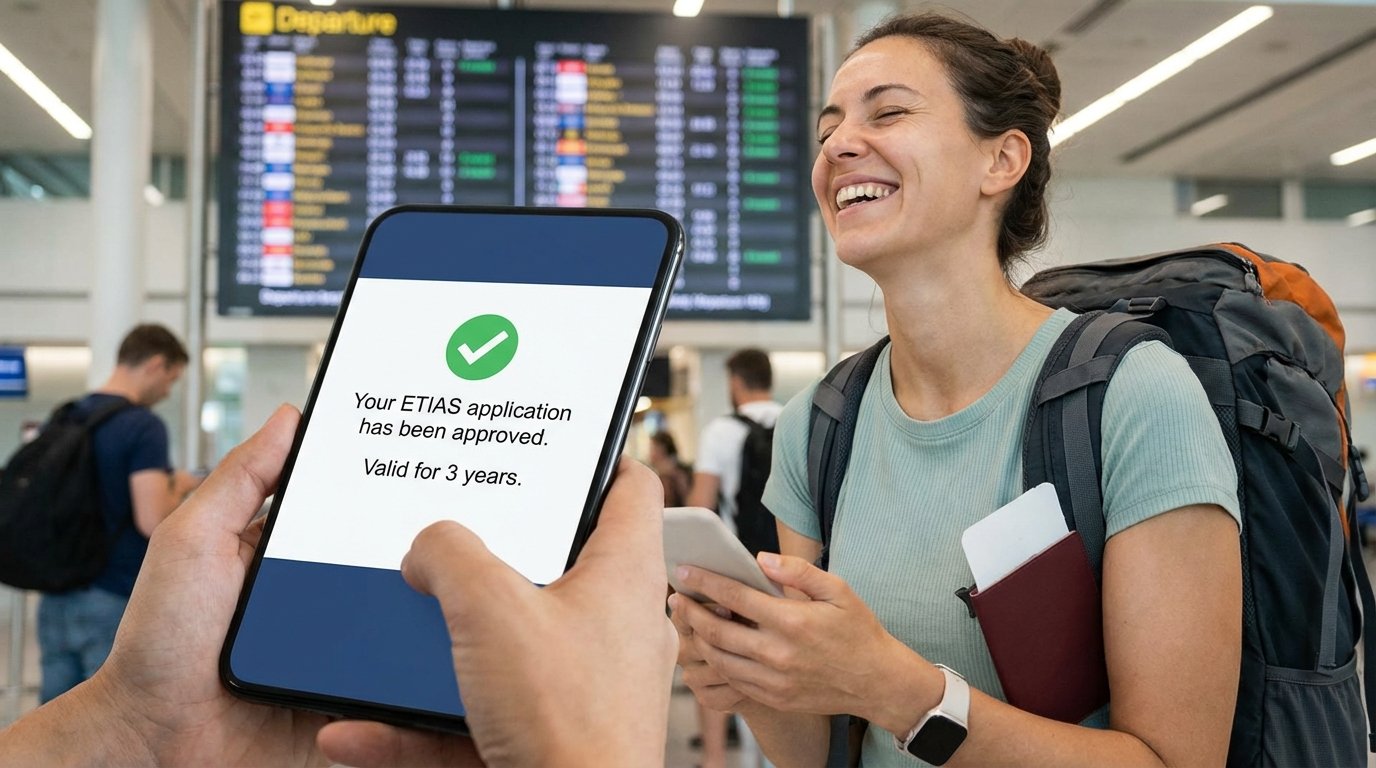
Your ETIAS authorization is valid for 3 years OR until your passport expires, whichever comes first. During those 3 years, you can enter Europe as many times as you want for stays up to 90 days per 180-day period.
Let’s do the math: if you visit Europe twice a year for three years, that’s €7 divided by 6 trips. About €1.17 per trip. Cheaper than airport coffee.
Processing Times:
– Standard: Instant to 72 hours (95% of applications)
– Additional review: Up to 30 days (if you answered “yes” to background questions)
– Denied applications: You’ll know within 30 days
My recommendation: Apply at least 2 weeks before travel. Not because it takes that long — because if something goes wrong with your application, you’ll have time to fix it or apply for a regular visa.
I learned this the hard way in that CDG airport disaster. Don’t cut it close.
Common Application Mistakes to Avoid
The ETIAS system is pretty forgiving, but three mistakes will absolutely wreck your application.
Mistake #1: Passport Expiration Date
Your passport must be valid for at least 3 months beyond your planned departure from Europe. Not your arrival date — your departure date.
Example: you’re visiting Germany March 1-15, 2026. Your passport needs to be valid until at least June 15, 2026. If it expires May 20, 2026, your ETIAS application gets rejected.
This catches people constantly because they think “my passport’s valid for my trip dates.” Nope. Europe wants that 3-month buffer.
Mistake #2: Background Questions Honesty
The background screening questions aren’t trying to trick you. They’re asking about serious stuff — criminal convictions, immigration violations, security threats.
If you have a DUI from 2015, that’s a criminal conviction. Select “yes” and provide details. Lying gets you banned from Europe for years. Being honest might delay your application by a few weeks, but you’ll probably still get approved.
Parking tickets, speeding violations, and civil matters don’t count as criminal convictions.
Mistake #3: Wrong First Entry Point
ETIAS asks which EU country you’ll enter first. This matters for data tracking, not for restricting your travel. But get it wrong and it can cause confusion at border control.
Flying into Amsterdam then taking a train to Berlin? Put Netherlands as your first entry point, even if Germany is your main destination.
Connecting through Frankfurt but your final destination is Rome? Germany is your first entry point because that’s where you’ll go through EU immigration.
Pro tip: Screenshot your ETIAS approval confirmation. Keep it in your phone’s photos so you can access it offline if needed.
Airlines are supposed to check ETIAS status before letting you board, but technology fails. Having proof on your phone saves headaches.
What Happens at European Borders
Good news: ETIAS doesn’t really change the border experience for most travellers.
You’ll still hand over your passport to the border guard. They’ll scan it, your ETIAS status pops up on their screen automatically, and you’re through. No additional documents to present, no extra questions unless something’s flagged.
The difference is airlines will check your ETIAS status before you board your flight to Europe. No ETIAS, no boarding pass. This is exactly how ESTA works for European visitors to the US.
Border Control Timeline:
– Arrive at EU airport
– Go to passport control (same lines as before)
– Present passport to border guard
– Guard scans passport, sees ETIAS status
– Standard questions: purpose of visit, length of stay, where you’re staying
– Passport stamped, welcome to Europe
Total time: 2-5 minutes per person, same as always.
What If Your ETIAS Expires While You’re in Europe?
Nothing happens. ETIAS is for entry authorization, not for staying. Once you’re legally in Europe, an expired ETIAS doesn’t affect your current visit.
But you’ll need a new authorization before your next trip.
Border Guard Red Flags:
Even with valid ETIAS, border guards can still deny entry if:
– You can’t prove onward travel plans
– You don’t have enough money for your stay (roughly €50-100 per day)
– You seem to be living in Europe on tourist stays
– Your story doesn’t match your ETIAS application
This stuff was always true. ETIAS just adds a pre-screening layer.
Europe travel insurance requirements
FAQ
Q: Can I apply for ETIAS without confirmed travel plans?
Yes, but you’ll need some basic details — like which country you plan to visit first and approximate travel dates. You don’t need booked flights or hotels, just reasonable estimates. Your ETIAS is valid for 3 years, so you can apply well before finalizing plans.
Q: What if I’m denied ETIAS authorization?
You can’t reapply for ETIAS, but you can apply for a regular Schengen visa at a European consulate. This involves more paperwork, higher fees (around €80), and an in-person appointment. Most people who get denied ETIAS also get denied regular visas, so figure out why you were rejected first.
Q: Do I need ETIAS for connecting flights through Europe?
Yes, if you’re leaving the international transit area or if your layover is over 24 hours. Direct connections where you stay in the secure transit zone don’t require ETIAS. But honestly, for €7, just get it anyway — gives you flexibility if your connection gets messed up.
Q: Can I use ETIAS to work in Europe?
Absolutely not. ETIAS is for tourism, business meetings, and transit only. Working — even freelance work — requires a proper work visa. Getting caught working on ETIAS authorization can get you banned from Europe for years.
Q: What happens if I lose my passport after getting ETIAS approval?
Your ETIAS is tied to your specific passport number. New passport means new ETIAS application. Keep this in mind if your passport is close to expiring — might be worth renewing the passport first, then applying for ETIAS with the new document.
Right, so here’s the bottom line on ETIAS 2026 guide requirements: this isn’t optional anymore.
€7 and 10 minutes now saves you from being that person at the airport gate watching their European vacation disappear. I’ve been that person. It’s expensive and embarrassing.
Apply at least two weeks before travel, double-check your passport expiration date, and be honest on those background questions. Europe’s not trying to keep you out — they just want to know you’re coming.
The grace period ends July 1, 2026. After that, no ETIAS means no Europe. Set a phone reminder now and get it done.
Trust me on this one.