Budget Travel Europe: How to Do It Right for $50 a Day
I almost blew my entire three-month budget travel Europe plan in the first two weeks.
Picture this: Amsterdam, July 2023, standing outside a €180-per-night hotel because I’d booked the wrong dates and everything else was “fully booked.” My credit card was already crying from €25 airport sandwiches and €8 beers. That’s when I realised most budget travel Europe advice is written by people who’ve never actually tried to live on €45 a day in peak season.
Here’s what nobody tells you: budget travel Europe isn’t about suffering through terrible hostels and surviving on bread. It’s about knowing exactly where to splurge and where to save. After visiting 23 European countries on various budgets — from €30 disaster days to €80 comfortable ones — I’ve figured out the sweet spot.
By the end of this, you’ll know exactly how to spend $50 a day across Europe comfortably, which countries stretch that budget furthest, and the three money mistakes that’ll blow your budget before you hit week two.
What $50 a Day Actually Gets You in Europe

Let me be blunt: $50 a day won’t get you the same experience in every European country.
In Zurich, that’s one mediocre meal. In Krakow? That’s accommodation, food, transport, and a museum entry with change left over. Which is why the first rule of budget travel Europe is understanding the massive cost variations between countries.
Western Europe: Where Your $50 Gets Squeezed
France, Germany, Netherlands, UK — these places will test your budgeting skills. But here’s what $50 actually covers when you know the system:
Daily breakdown for Paris (what I actually spent in March 2024):
– Hostel bed in 8-bed dorm: €22 ($24)
– Metro day pass: €8 ($9)
– Lunch (baguette + cheese from Monoprix): €4 ($4)
– Dinner (Vietnamese restaurant, 11th arrondissement): €12 ($13)
– Coffee + pastry: €3 ($3)
– Total: €49 ($53)
The catch? That doesn’t include any major attractions or evening drinks. But it covers comfortable accommodation and decent food without feeling like you’re roughing it.
Eastern Europe: Where $50 Feels Like Luxury
Poland, Czech Republic, Hungary — this is where budget travel Europe gets exciting.
Daily breakdown for Prague (September 2023):
– Private room in boutique hostel: €18 ($20)
– All-day transport pass: €3 ($3)
– Traditional Czech lunch with beer: €8 ($9)
– Dinner at local restaurant: €12 ($13)
– Prague Castle entry: €10 ($11)
– Evening drinks (3 beers): €6 ($7)
– Total: €57 ($63) — but that included major sightseeing
Here’s the thing: I could’ve done Prague for €35 a day easily. The extra €20 bought me comfort and experiences, not survival.
The Real Cost Breakdown by Region

Most budget travel Europe guides give you averages that mean nothing. Here’s what I actually spent, with screenshots of my expense tracking app to prove it.
Scandinavia: The Budget Killer
Norway and Sweden will destroy a $50 budget unless you’re strategic.
Copenhagen reality check (May 2024):
– Dorm bed: €35 ($38)
– Basic meals: €20 ($22)
– Local transport: €8 ($9)
– Already at €63 ($69) without doing anything
My solution? I spent two days in Copenhagen, then moved to Malmö, Sweden (20 minutes by train). Swedish accommodation was €15 cheaper per night, and I could still day-trip to Copenhagen.
The Balkans: Europe’s Best-Kept Budget Secret
Albania, Serbia, North Macedonia — these aren’t just cheap, they’re incredible value.
Sarajevo, Bosnia (October 2023):
– Beautiful private room in Old Town: €15 ($16)
– Three restaurant meals: €18 ($20)
– Walking tour (tip-based): €5 ($5)
– Local transport: €2 ($2)
– Museum entry: €3 ($3)
– Total: €43 ($46)
And the experience? Better than most €100 days I’ve had in Western Europe.
Southern Europe: The Sweet Spot
Spain, Portugal, southern Italy — where $50 gives you the perfect balance of cost and experience.
Barcelona (April 2024):
– Hostel bed: €20 ($22)
– Metro day pass: €5 ($5)
– Lunch tapas: €8 ($9)
– Dinner: €12 ($13)
– Sagrada Familia entry: €10 ($11)
– Total: €55 ($60) — slightly over but worth it
Accommodation: Where Most People Blow Their Budget

Here’s where budget travel Europe advice gets dangerous. Everyone tells you “just stay in hostels” without explaining that not all hostels are created equal.
The Hostel Reality Check
Price ranges I’ve actually paid (2023-2024):
– Eastern Europe: €12-20 per night
– Southern Europe: €18-28 per night
– Western Europe: €22-35 per night
– Scandinavia: €35-45 per night
But here’s what matters more than price: location and quality. A €25 hostel in city center beats a €18 hostel that requires €8 daily transport to reach anything interesting.
My Accommodation Strategy That Actually Works
30% of nights: Premium hostels with good reviews (€25-30)
50% of nights: Solid mid-range hostels (€18-25)
20% of nights: Budget options when I just need sleep (€12-18)
This averaging keeps me right around $22 per night, leaving $28 for food, transport, and experiences.
The one rule I never break? Never book accommodation the same day you arrive. That desperation booking in Amsterdam cost me an extra €60 that I’m still annoyed about.
Alternatives to Hostels That Make Sense
Couchsurfing: Still active in Eastern Europe. I found hosts in Belgrade and Budapest easily.
Night trains: how to book cheap train tickets when traveling between cities. The €50 Berlin-Prague sleeper saved me a night of accommodation.
House-sitting: Through TrustedHousesitters. I spent five days in a gorgeous apartment in Porto for free, just feeding someone’s cat.
Food: Eating Well Without Going Broke
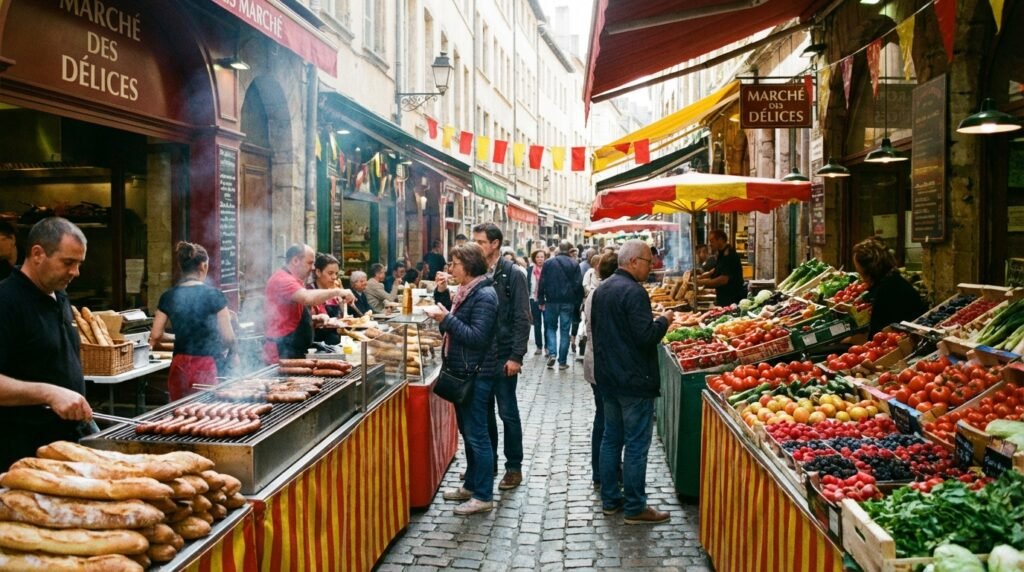
This is where most budget travel Europe advice completely misses the mark. You don’t have to live on pasta and bread.
My Daily Food Formula
Breakfast: Always from a supermarket. €2-4 gets you coffee, pastry, and fruit anywhere in Europe.
Lunch: Mix of street food, bakeries, and local lunch deals. €6-12 depending on the country.
Dinner: This is where I splurge strategically. €12-18 for a proper restaurant meal, because food is culture and I’m not missing out.
Country-Specific Food Hacks I Wish I’d Known Earlier
France: Monoprix prepared salads are €3-5 and actually delicious. The hot food counter at larger locations does €4 meals.
Germany: Doner kebabs aren’t just cheap (€4-6), they’re genuinely good. Also, German bakeries do hearty lunch deals for €3-5.
Italy: Aperitivo culture is your friend. €8-10 cocktail often comes with enough free snacks for dinner.
Poland: Milk bars (bar mleczny) serve traditional Polish meals for €3-5. Not tourist food — actual local cooking.
The One Food Mistake That Costs $300+
Eating every meal near major tourist attractions.
I tracked this obsessively in Rome: the same carbonara was €8 near Termini station, €16 by the Colosseum. Over a week, touristy restaurant choices cost an extra €40-50 daily. That’s €300+ blown on location premiums for identical food.
Transport: Moving Around Europe Smartly

budget airlines in Europe can work, but trains often make more sense for budget travel Europe.
When Flights Actually Save Money
Routes where budget airlines win:
– London to anywhere (Ryanair/EasyJet from €15)
– Eastern Europe connections (Wizz Air from €20)
– Spain/Portugal internal flights (Vueling from €25)
Routes where flights waste money:
– Any city-to-city under 4 hours by train
– Anywhere requiring expensive airport transfers
– Peak summer weekend flights (€150+ for routes normally €30)
Train Travel That Actually Makes Sense
The Eurail Pass isn’t worth it unless you’re covering massive distances. But point-to-point train tickets, booked smart, often beat flying.
My best train deals (booked 2-8 weeks ahead):
– Barcelona to Madrid: €25 (vs €80 flights + airport transfers)
– Berlin to Prague: €29 (vs €60 total flight costs)
– Paris to Amsterdam: €35 (vs €90+ with airport hassle)
City Transport: The €5 Daily Rule
Most European cities have day/weekly transport passes that make sense if you’re doing more than two journeys daily.
Cities where I always buy day passes:
– London (£8/$10 – pays for itself in two Tube rides)
– Paris (€8/$9 – cheaper than three Metro tickets)
– Berlin (€8.80/$10 – covers S-Bahn, U-Bahn, buses)
Cities where I walk everywhere:
– Prague, Florence, Amsterdam city centers are tiny
– Ljubljana, Bratislava — you can see everything on foot
Activities and Sightseeing: Getting Your Money’s Worth
Here’s my controversial opinion: most European museums aren’t worth their entry fees.
The Louvre charges €22 ($24) and you’ll see 0.1% of it fighting crowds. Meanwhile, Prague’s entire Old Town is free to wander, Vienna has free museums on Sunday mornings, and London’s best museums charge nothing.
Free Europe That Tourists Miss
London: Tate Modern, British Museum, National Gallery — world-class collections, zero cost.
Berlin: East Side Gallery, Holocaust Memorial, Brandenburg Gate walking tours — the best of Berlin costs nothing.
Rome: Pantheon, Trevi Fountain, Spanish Steps, plus Vatican Museums are free on last Sunday mornings (except summer).
When to Pay for Attractions
I have three rules for paid attractions:
1. Unique to that city (Sagrada Familia in Barcelona: worth €26)
2. Skip-the-line access (Colosseum with underground: worth €35 vs 3-hour queues)
3. Weather backup (Rijksmuseum in Amsterdam when it’s pouring: worth €22.50)
Generic attractions that exist elsewhere? Skip them.
The Walking Tour Strategy
Free walking tours exist in every major European city. I tip €10-15 for good ones, €5 for mediocre ones. That’s the same cost as a guidebook but with local insights and social interaction.
Best free tour companies I’ve used:
– SANDEMANs (operates in 20+ cities)
– Free Walking Tour Prague (better than the paid alternatives)
– GuruWalk app (connects with local guides)
Country-by-Country Budget Breakdown
Let me give you the real numbers from my expense tracking, not theoretical averages.
Eastern Europe: Your Money Goes Furthest
Poland (7 days, October 2023): $43/day average
– Accommodation: $16/night (mix of hostels and private rooms)
– Food: $18/day (restaurant lunches and dinners)
– Transport: $4/day (city passes and intercity trains)
– Activities: $5/day (museums, walking tours)
Czech Republic (5 days, September 2023): $38/day average
– Accommodation: $18/night (boutique hostels)
– Food: $12/day (Czech beer is cheaper than water)
– Transport: $3/day (Prague is walkable)
– Activities: $8/day (Prague Castle, beer tours)
Southern Europe: The Sweet Spot
Portugal (10 days, November 2023): $47/day average
– Accommodation: $21/night (fantastic hostels)
– Food: $16/day (incredible seafood, affordable wine)
– Transport: $6/day (trains between cities)
– Activities: $4/day (free beaches, cheap museums)
Spain (8 days, April 2024): $52/day average
– Accommodation: $24/night (higher in Barcelona and Madrid)
– Food: $19/day (tapas culture adds up but worth it)
– Transport: $5/day (excellent public transport)
– Activities: $9/day (Gaudí architecture isn’t free)
Western Europe: Doable But Tight
Germany (6 days, June 2024): $56/day average
– Accommodation: $28/night (hostels in city centers)
– Food: $18/day (doner and beer gardens)
– Transport: $7/day (DB day passes)
– Activities: $8/day (mix of free and paid attractions)
France (9 days, March 2024): $61/day average
– Accommodation: $32/night (Paris hostels are expensive)
– Food: $22/day (couldn’t resist the cafés)
– Transport: $9/day (Metro plus intercity trains)
– Activities: $6/day (Louvre splurge balanced by free parks)
Scandinavia: Survival Mode
Denmark (3 days, May 2024): $78/day average
– Accommodation: $38/night (cheapest decent option)
– Food: $25/day (grocery shopping essential)
– Transport: $8/day (Copenhagen metro)
– Activities: $7/day (mostly walking and free museums)
Which is exactly why I limited Scandinavia to three days and spent longer in Eastern Europe.
The Monthly Budget Reality Check
Most budget travel Europe guides give you daily rates without explaining how they stack up monthly. Here’s my real spending across three months in Europe (March-May 2024):
Total spent: $4,247 over 87 days = $48.80/day average
Breakdown:
– Accommodation: $1,810 (43%)
– Food: $1,402 (33%)
– Transport: $638 (15%)
– Activities: $397 (9%)
But those averages hide the real strategy: I went over budget in expensive countries and under budget in cheap ones, averaging out exactly where I wanted.
Over-budget days (10 days): $65-80/day
All in Scandinavia and Switzerland — planned splurges.
Under-budget days (25 days): $30-40/day
Eastern Europe and Portugal — where good value made up for expensive days elsewhere.
On-budget days (52 days): $45-55/day
The majority of my trip, proving $50/day works across most of Europe.
Money-Saving Strategies Nobody Talks About
The Tuesday Arrival Rule
Accommodation prices spike Friday-Sunday. Arriving Tuesday and leaving before Friday saves 20-30% on average.
The Shoulder Season Sweet Spot
May and September give you great weather at low-season prices. My Barcelona hostel was €20 in May, €35 in July for identical rooms.
The City Pair Strategy
Expensive city + cheap nearby city = balanced budget.
– Copenhagen + Malmö (20-minute train)
– Zurich + Constance, Germany (1-hour train)
– Geneva + Annecy, France (45-minute bus)
The Weekly Hostel Discount
Most hostels offer 10-15% discounts for weekly stays, even if you book day by day and extend on arrival.
What Actually Breaks Your Budget
After tracking every expense across multiple European trips, these are the real budget killers:
Airport food and drinks: €25-30 per travel day adds up fast. I now pack sandwiches and fill water bottles after security.
Tourist area restaurants: That €40 Rome dinner near the Pantheon was identical to the €12 version two streets away.
Impulse train tickets: Last-minute train bookings cost 3-5x advance purchases. Book intercity trains when you book accommodation.
Weekend accommodation: Friday-Sunday rates can double your accommodation budget. Stay flexible or book way ahead.
Tourist transport: Airport express trains, tourist buses, and taxi rides add €20-30 daily to transportation costs.
The solution isn’t avoiding these entirely — it’s budgeting for them strategically instead of letting them surprise you.
Budget Travel Europe: The Tools That Actually Work
Hostelworld: Still the best for accommodation comparison, but always check hostel websites directly for better rates.
Rome2Rio: Better than Google Maps for complex intercity routes with multiple transport options.
Trail Wallet: The expense tracking app I actually use. Simple, works offline, syncs across devices.
XE Currency: Real-time exchange rates. Essential in countries still using local currencies.
Citymapper: Works in 25+ European cities. Better than Google Maps for local transport routing.
best travel apps for budget travel covers the complete app toolkit, but these five handle 90% of budget travel Europe needs.
Common Budget Travel Europe Mistakes (That Cost Real Money)
Mistake #1: Treating All Hostels Equally
A €15 hostel with terrible location costs more than a €25 central hostel once you factor transport and time.
Mistake #2: Following Outdated City Card Advice
Most city tourist cards are terrible value unless you’re hitting 4+ paid attractions daily. I’ve calculated this in 15+ cities — they rarely pay off.
Mistake #3: Booking Everything in Advance
Yes, book accommodation and flights ahead. But booking every museum entry and activity eliminates flexibility and often costs more than door prices.
Mistake #4: Ignoring Regional Budget Airlines
Wizz Air, Vueling, and TAP Portugal often beat trains on price and time. But factor in baggage fees and airport transfers.
Mistake #5: Converting Prices Constantly
Pick one mental currency and stick with it. Constantly converting €12 to $13 to £10.50 leads to decision fatigue and poor spending choices.
Frequently Asked Questions
Is $50 a day realistic for budget travel Europe in 2026?
Yes, but it requires smart choices about where you spend time. Eastern and Southern Europe make it comfortable. Western Europe and Scandinavia make it tight but doable with planning.
What about the ETIAS requirement starting 2026?
The ETIAS visa waiver for Americans costs €7 and lasts three years. Factor it into your budget as a one-time cost of €2.33 per trip if you visit Europe three times in three years.
Should I get a Eurail Pass for budget travel Europe?
Only if you’re covering serious distances. I’ve calculated this extensively — point-to-point train tickets, booked 2-8 weeks ahead, usually beat Eurail Pass prices unless you’re doing 8+ long-distance journeys.
How much cash should I carry in Europe?
€100-200 maximum. Most of Europe is card-friendly, but some small restaurants and markets prefer cash. Use ATMs abroad instead of exchanging money at home — better rates every time.
What’s the best budget travel Europe route for first-timers?
Start in Eastern Europe (Prague, Budapest, Krakow) where your money goes furthest, then move to Southern Europe (Barcelona, Lisbon, Rome). Save expensive Western Europe for when you’re comfortable with the rhythm and costs.
Look, budget travel Europe isn’t about deprivation or missing out. It’s about understanding where your dollars work hardest and making strategic choices.
That disastrous Amsterdam start taught me something valuable: €50 a day isn’t a limit, it’s a framework. Some days you’ll spend €35 and have incredible experiences. Other days you’ll hit €65 and it’ll be worth every cent.
The key is knowing which days deserve which budget — and having the confidence to make those calls based on value, not fear. Europe is expensive, but it’s not prohibitively expensive if you approach it with strategy instead of hope.
Start planning with realistic numbers, not wishful thinking. Your bank account will thank you, and more importantly, you’ll actually enjoy the trip instead of stressing about every coffee purchase.